By the nineteenth century, the river’s energy had drawn blacksmiths and textile workers into the valley alongside the millers. The ironwork they produced still catches the eye across Edinburgh today, in wrought gates and decorative metalwork that outlasted the forges themselves. The looms, meanwhile, were laying the foundations of Scotland’s most recognisable cloth — the tartans and woollens that tourists now seek in the city’s shops have their roots, in part, in the damp and clattering mills of the dene.
Yet for all its industry, the village remained apart — physically below Edinburgh, developing in isolation, housing the working poor who ran the machines rather than those who owned them.
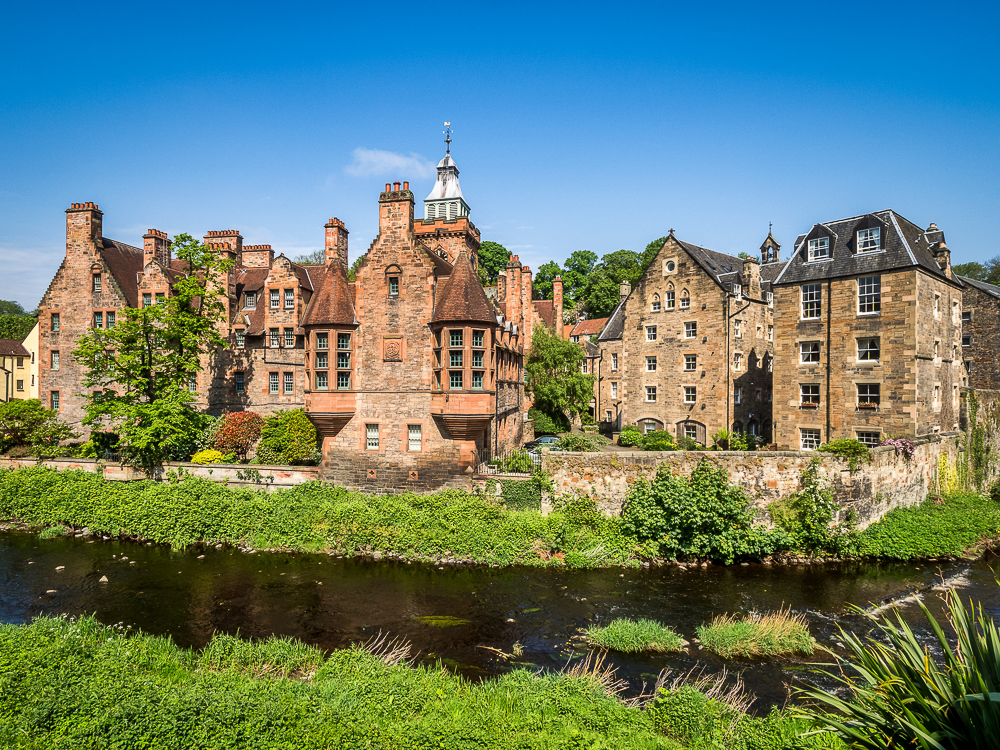
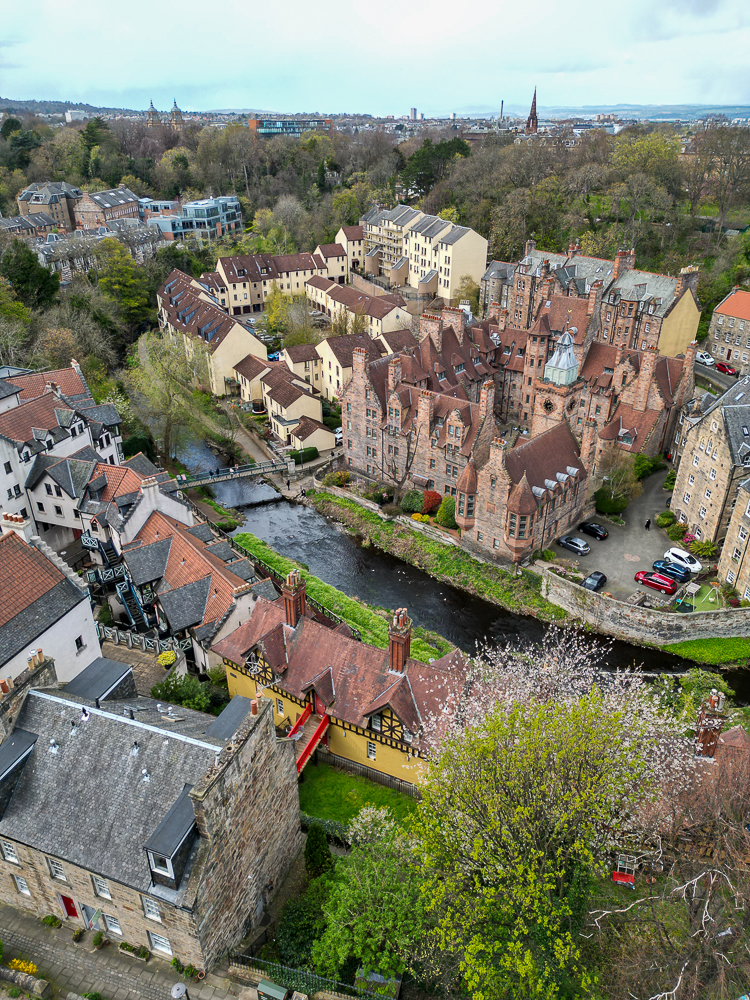
It was a view from above, however, that changed things. John Richie Findlay, editor of The Scotsman, lived in Edinburgh’s prosperous West End of New Town at 2 Rothesay Terrace, where he could look out over the valley and see the distance between his world and the one below. He and his son, also Sir John Richie Findlay, 1st Baronet, directed funding toward new social housing, and the results are still visible in the development known as Wells Court: the Clock Tower, and the handsome Well Court, its courtyard, turrets and social accommodation a gesture of decency from the heights to the hollow.
But gestures have their limits. Through the first half of the twentieth century, Dean Village continued its long diminishment. Between the 1930s and 1960s, large families crowded into single rented rooms, with outdoor toilets and cold that settled into the bones and walls alike. As the industry modernised in Leith, trade drained away from the village. The last tannery closed in 1960 — a marker, the end of something that had been ending for a very long time.
Then the 1970s and 1980s brought renovation rather than demolition. Homes were repaired. Industrial buildings were converted, their stone bones given new purpose. The Water of Leith still runs through the village, as it always has. The valley keeps its long history close — just beneath the surface.